

Losing Ones Head in the Ancient Near East: Interpretation and Meaning of Decapitation (Studies in the History of the Ancient Near East)
Losing Ones Head in the Ancient Near East: Interpretation and Meaning of Decapitation (Studies in the History of the Ancient Near East)
Rita Dolce
This volume examines the meaning of this specific act in times of war. With examples drawn from Anatolia, Syria and Mesopotamia between the 3rd and 1st millennium BC, from prehistory to the Neo-Assyrian period, this fascinating study will be valuable to anyone interested in the dynamics of war in the ancient world.
Condition: Used - Good
Couldn't load pickup availability
Share
Collapsible content
Summary
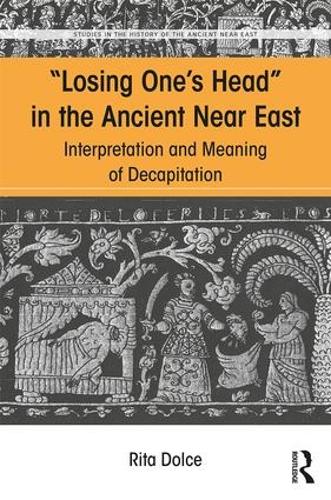
In the Ancient Near East, cutting off someone’s head was a unique act, not comparable to other types of mutilation, and therefore charged with a special symbolic and communicative significance. This book examines representations of decapitation in both images and texts, particularly in the context of war, from a trans-chronological perspective that aims to shed light on some of the conditions, relationships and meanings of this specific act. The severed head is a “coveted object” for the many individuals who interact with it and determine its fate, and the act itself appears to take on the hallmarks of a ritual. Drawing mainly on the evidence from Anatolia, Syria and Mesopotamia between the third and first millennia BC, and with reference to examples from prehistory to the Neo-Assyrian Period, this fascinating study will be of interest not only to art historians, but to anyone interested in the dynamics of war in the ancient world.
Product Description
Title - Losing Ones Head in the Ancient Near East: Interpretation and Meaning of Decapitation (Studies in the History of the Ancient Near East)
Edition -
Author - Rita Dolce
ISBN 13 - 9781138067486
Imprint - Routledge
Publisher - Taylor & Francis Ltd
Date Published - 19/12/2017
Prize -
No. of pages -
Binding Type - Hardback
Dimensions - 156 x 234 x mm
Weight - 317 g
Languages - English